Legos are more than just bricks. Let’s be honest for a second. We have all been there.
It is 2:00 AM. The house is dark. You are tiptoeing across the living room to get a glass of water, and then—CRUNCH.
You have stepped on a LEGO brick. Specifically, a 2×4 standard brick with the sharpest corners known to mankind. In that moment of searing foot pain, you might question why you allow these colorful little plastic landmines into your home.
But then, the sun comes up. You see your child sitting on the floor, tongue sticking out in concentration, trying to find that one specific gray piece to finish a spaceship wing. You sit down next to them, just to “help for a second,” and suddenly, an hour has passed. You aren’t checking your email. You aren’t worrying about the laundry. You are just… building.
In a world dominated by screens, schedules, and constant noise, sitting down to build a LEGO set with your child is one of the few activities that genuinely pauses time. It is more than just a toy; it is a bridge. And for parents of young kids, crossing that bridge is one of the most important things you can do this weekend.
The Magic of the “Co-Build”
There is a distinct vibe shift that happens when you open a new box of bricks. We call it “The Zone.”
When you build with your child, the hierarchy changes. You aren’t just “Mom” or “Dad” giving orders to brush teeth or eat vegetables. You become teammates. You become the Chief Brick Finder to their Master Builder.
There is something incredibly grounding about the tactile nature of it. The sound of the bricks rattling in the box, the satisfying snap of two pieces locking together, and the shared visual instructions create a collaborative environment that is hard to replicate elsewhere.
You are engaged in a shared mission. Whether you are constructing a towering castle, a fast car, or a chaotic zoo where the lions are driving the bus, you are building a narrative together. You are listening to their ideas, and they are learning to trust your guidance when the instructions get tricky. It is a conversation without words, spoken entirely in plastic studs.
Sneaky Learning (The Vegetables Disguised as Candy)
We all know LEGO is “educational,” but if you tell a six-year-old that, they might run the other way. The beauty of building together is that they are learning massive life skills, and they think they are just playing.
When you sit there with them, you are actively modeling resilience.
What happens when the tower topples over? What happens when they realize they skipped a step on page 12 and now page 20 doesn’t make sense?
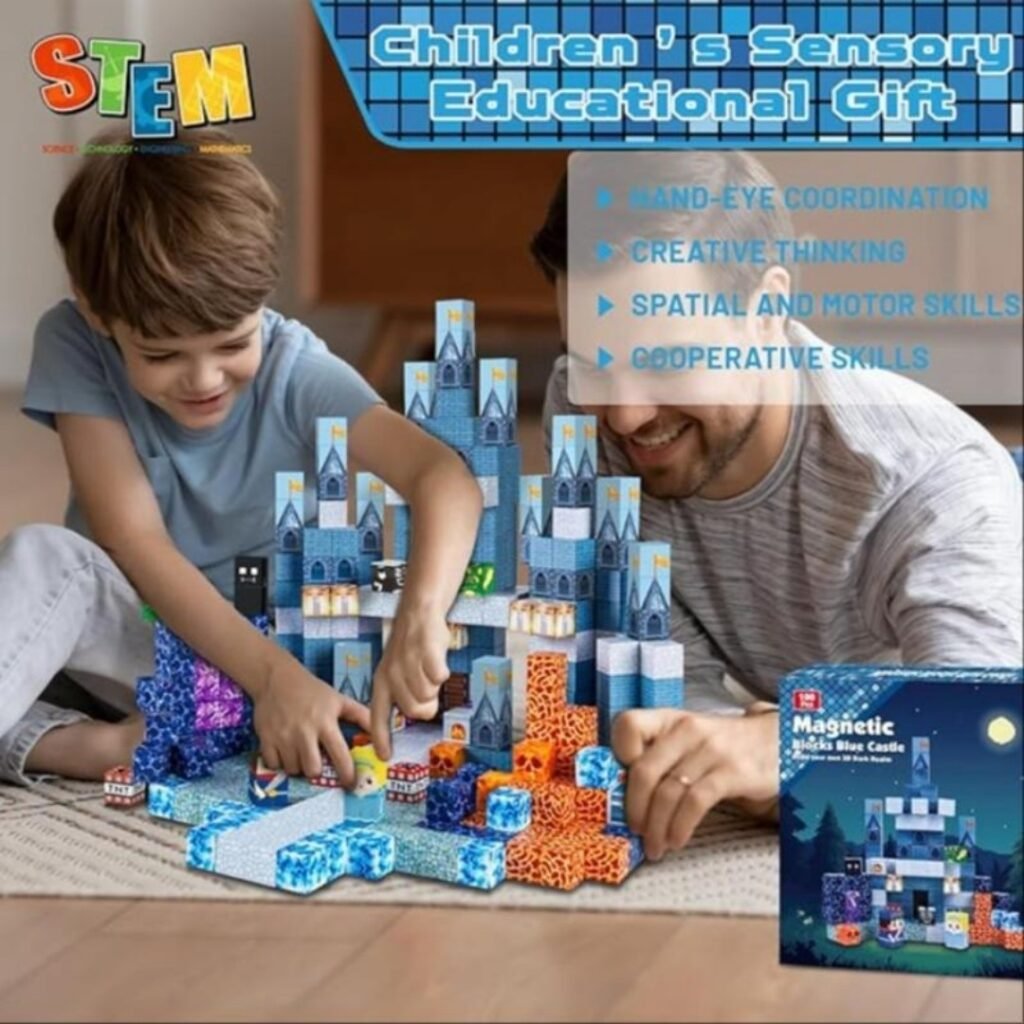
If they are alone, that might result in a meltdown. But if you are there, it becomes a teachable moment. You show them how to backtrack. You show them that making a mistake isn’t the end of the world—it’s just part of the build. You are teaching patience, fine motor skills, and spatial awareness, all while debating whether the ninja needs a sword or a croissant.
Bridging the Generational Gap
For many of us parents, LEGO is a huge hit of nostalgia. We remember the sets we had growing up. We remember the smell of the plastic and the limitation of only having basic colors.
Sharing this with your kids creates a unique generational link. It allows you to enter their world, but it also allows you to share a piece of yours. You get to rediscover your own inner child.
Let’s admit it: building is therapeutic for adults, too. After a stressful week at work, focusing on following a clear set of instructions where everything fits together perfectly? That is incredibly soothing. Your child gets your full attention, and you get a mental break. It is a win-win.
Why the “Right” Set Matters
However, there is one trap many well-meaning parents fall into: Buying the wrong set.
We have all done it. We see a massive, 2,000-piece Star Wars ship on the shelf and think, “Oh, they will love this!” But if your child is four years old, that set is going to result in frustration, lost pieces, and you ending up building 99% of it while your child watches TV.
Conversely, if you buy a set that is too simple for an advanced builder, they get bored in ten minutes.
To get those magical bonding moments, you have to find the “Goldilocks” zone—the set that is just right.
- For the Toddlers (1.5 – 4 years): You want DUPLO or LEGO Juniors (4+). These have larger pieces for small hands and offer instant gratification. They build confidence.
- For the Young Builders (5 – 7 years): You want themes they recognize (City, Friends, or their favorite characters) with distinct, manageable bags.
- For the Big Kids: You can start introducing Technic or more complex architecture.
The goal is to find a set that challenges them enough to need your help occasionally, but is accessible enough that they feel ownership over the final product.
The Next Step
So, here is your mission for the week: Clear off the dining room table. Put the phones in the other room. Open a fresh box of bricks.
Don’t worry about the mess (you can clean it up later). Focus on the look in your child’s eyes when they finally click that last piece onto the roof and look at you with pure pride.
If you aren’t sure where to start, or if you are looking for that perfect set that matches your child’s current obsession—whether it’s dinosaurs, princesses, or supercars—take a look around. It is worth taking the time to shop for the specific age range that fits your family.
You can browse a curated selection of age-appropriate sets right now at xyzbuyshop.com. We have organized everything to help you find the perfect project for your next family build night.
Grab a set, grab a snack, and get building. Your future master builder is waiting for you.