Have you ever watched your child play? You might notice they are natural scientists. They ask “Why is the sky blue?” They try to build towers out of blocks until they fall over. They mix different colors of playdough together to see what happens.
This natural curiosity is the foundation of STEM: Science, Technology, Engineering, and Mathematics.
As parents, we don’t need to be scientists ourselves to help our children love these subjects. We just need to encourage their questions and provide them with the right tools to explore.
However, in today’s modern world, parents face a big challenge: screens. How do we balance the digital world with the need for real-life, hands-on learning?
This guide will help you navigate that balance and choose the best toys to help your child’s brain grow.
1. It Starts with Curiosity (Not Toys!)
Before we talk about buying expensive robots or science kits, we need to talk about mindset. The best way to encourage STEM is to foster a “questioning attitude.“
Science isn’t just about facts in a textbook. It is about observing the world and solving problems.
Interactive Tip: Next time you are on a walk, stop and look at a bug. Instead of saying “That’s an ant,” ask your child, “What is that ant doing? Where do you think it is going with that crumb?“
Simple ways to spark curiosity daily:
-
Cooking together: Baking is just tasty chemistry! Talk about how the ingredients change when they get hot.
-
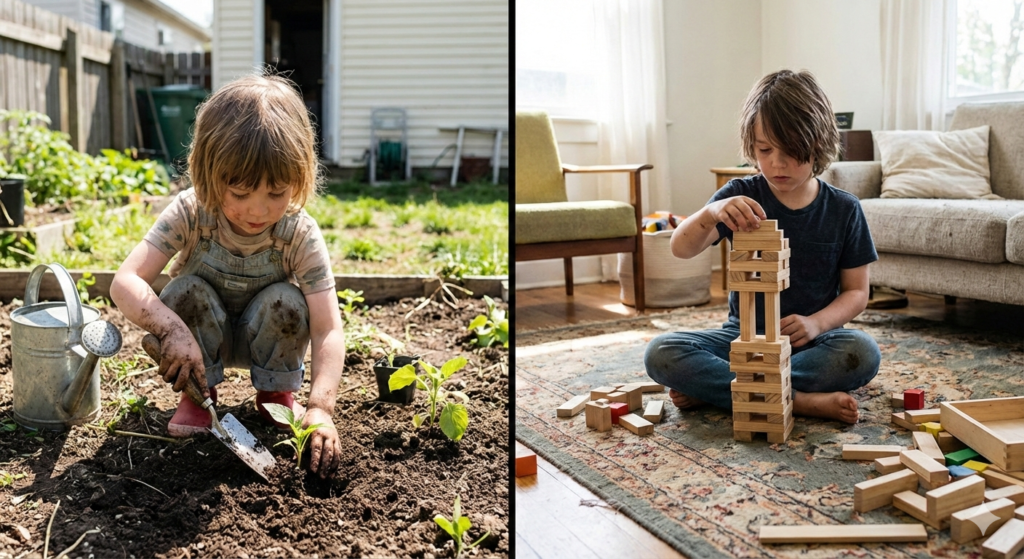
Building forts: Using blankets and chairs to make a fort is basic engineering. If it falls down, ask, “How can we make the base stronger?“
-
Gardening: Planting a seed and watching it grow is a wonderful biology lesson.
2. The Dilemma: Balancing Screen Time and Hands-On Play
This is the hardest part for many modern parents. Tablets, phones, and TVs are everywhere. Are they bad for STEM learning? Not necessarily. But they need balance.
The Problem with Too Much Screen Time: When a child only watches videos, their brain is passive. They are receiving information, but they aren’t doing anything with it. STEM requires active problem-solving.
The Power of Hands-On Play: Children, especially young ones, learn with their whole bodies. When they connect Lego bricks, pour water between cups in the bathtub, or feel the magnets snap together, they are building “muscle memory” in their brains. They are learning about gravity, weight, and texture in a way a screen cannot teach.
How to Find Balance: Use screens as a tool, not a babysitter.
-
Watch then do: If your child watches a video about volcanoes, don’t just move to the next video. Stop and say, “Let’s build our own volcano with baking soda and vinegar!“
-
Active Apps: Choose apps that require the child to create or code something, rather than just popping bubbles or watching cartoons.
3. The Magic of STEM Toys
A “STEM toy” is a toy that helps a child develop skills in science, technology, engineering, or math. But don’t worry, this doesn’t mean boring educational tools!
The best STEM toys are “open-ended.” This means there is no single right way to play with them.
A puzzle has only one way to be finished. A box of building blocks has infinite possibilities. Open-ended toys encourage creativity and problem-solving because the child has to decide what to create.
Why these toys work:
-
They teach resilience: When a block tower falls over, the child learns to deal with frustration and try a new plan. That’s engineering!
-
They improve spatial skills: Understanding how objects fit together in the real world is crucial for future math and engineering skills.
4. Parent’s Guide: Choosing Age-Appropriate STEM Toys
It can be overwhelming to walk into a toy aisle. Here is a simple guide to choosing the right toys for your child’s age.
For Toddlers (Ages 1–3)
At this age, it is all about cause-and-effect and motor skills. Safety is the most important thing—avoid small parts!
-
What to look for: Big, chunky pieces that are easy to hold. Bright colors.
-
Great toy ideas:
-
Large wooden stacking rings.
-
Bath pipes that water can flow through.
-
Oversized building blocks (like LEGO Duplo).
-
For Preschoolers (Ages 3–5)
Their imaginations are exploding! They are starting to understand how things connect and can handle slightly more complex building.
-
What to look for: Toys that allow for imaginative construction and basic sorting.
-
Great toy ideas:
-
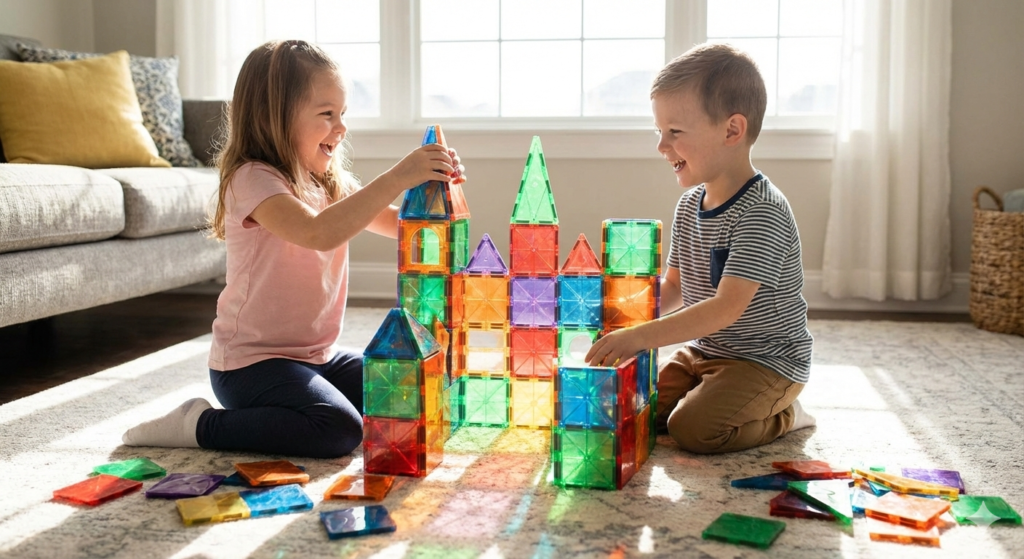
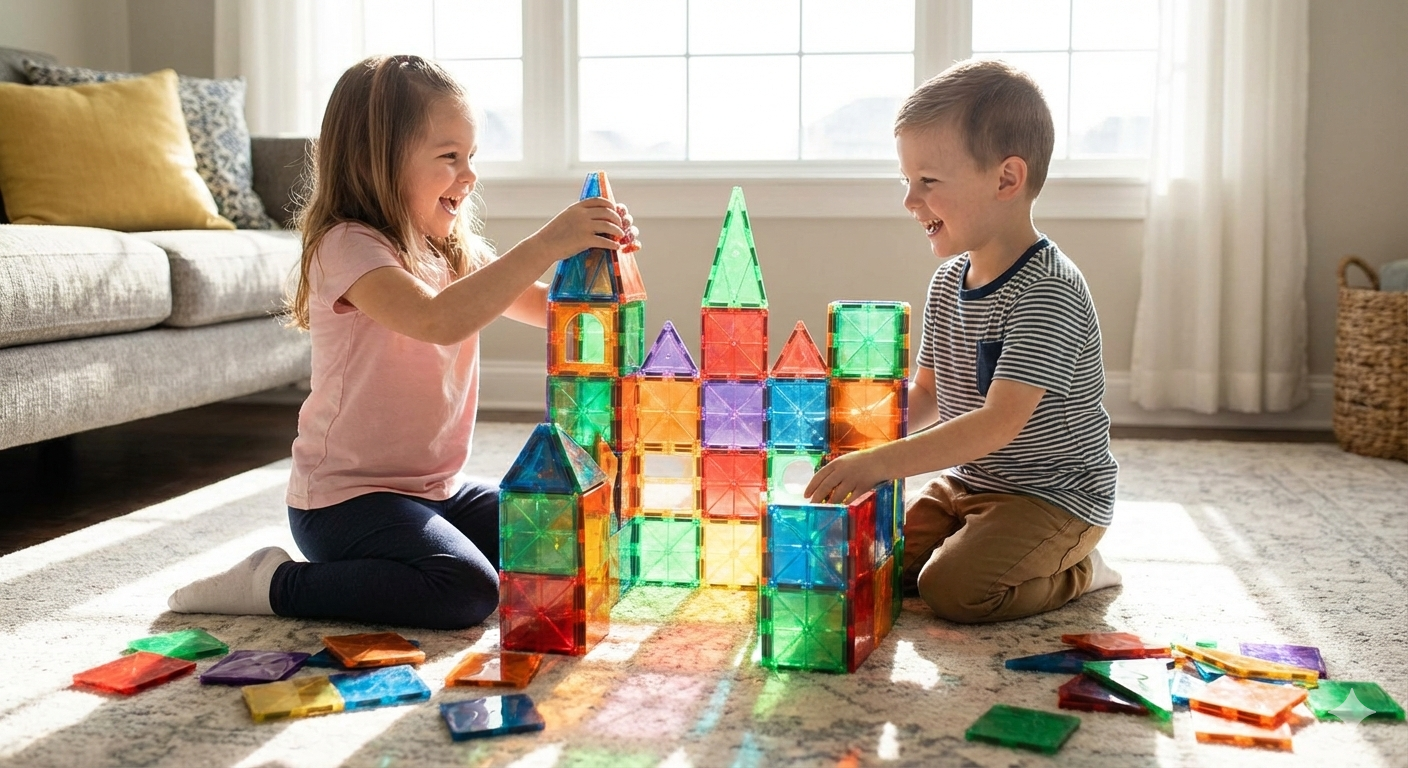
Magnetic Tiles: These are fantastic for understanding 3D shapes and magnetism.
-
Simple Marble Runs: They teach gravity and cause-and-effect.
-
BugCatching Kits: A simple magnifying glass and a plastic jar can provide hours of biology fun outside.
-